School dossier · Charlotte, NC
Providence Day School
9 research areas · 52 documents distilled

Welcome Video
From the schoolAn introduction to Providence Day School, in the school’s own words. Press play to watch.
Latest News
Admissions
Compare on AdmissionsGrade-by-Grade Application Guide — TK/K · 1–5 · 6–12
One portal. Everything runs through Charger Commons: the inquiry triggers your account invitation, and the portal generates a personalized checklist that tracks every step.
Dates are cycle-specific. Every date below is the 2026–27 entry cycle from the live admissions calendar. Cycle dates shift year to year — verify before acting.
Same spine in every band — inquire → apply → materials → decision → contract. What changes is the testing and the calendar. Selection weighs "academic performance, school records, teacher recommendations, extracurricular activities, and social-emotional maturity."
- Inquire & tourFall 2026
The Inquiry form books your campus tour and triggers the invitation to create your Charger Commons account.
- Submit the TK/K application + feeby Jan 2
Apply early — the Readiness Screening can't be scheduled until the application is in, and the earliest applicants get the earliest slots. Fee amount isn't published; confirm with admissions.
- Preschool Teacher Recommendation Formby Feb 1
Sent to your child's current teacher through the portal checklist.
- WPPSI-IV assessmentby Feb 1
The Wechsler preschool scale. Your child "must be at least 4 years old at the time of assessment administration."
- School Readiness Screeningby Feb 1
"Application MUST be submitted prior to scheduling the Readiness Screening" — the sequencing quirk that makes step 2 urgent.
- TK/K Classroom Visitby Feb 1
A required visit — the school observes readiness in a real classroom setting.
- Decision → contract + depositFeb 26 → Mar 5
Decisions release 4:00 p.m. Feb 26; the signed contract and $2,500 deposit (credited toward tuition) are due at noon Mar 5. Later applications go to rolling review for remaining seats.
The youngest band runs on an earlier calendar than everyone else and uses a readiness model — WPPSI-IV, Readiness Screening, and Classroom Visit — instead of standardized testing. Three assessment pieces means three appointments to schedule: another reason the early application matters.
The school publishes one rule: applicants must be at least 4 at the time of assessment. A specific "turn 4/5 by September 1" cutoff isn't published — confirm your child's eligibility with admissions before applying.
Clarity application ($65) due Jan 22 for prospective families — complete both processes on time and the aid decision arrives inside the Enrollment Agreement. Applying for aid never influences admission; separate committees decide.
Exactly what changes between bands
| TK / Kindergarten | Grades 1–5 | Grades 6–12 | |
|---|---|---|---|
| Application due | Jan 2, 2027 | Jan 15, 2027 | Jan 15, 2027 |
| Materials due | Feb 1, 2027 | Feb 26, 2027 | Feb 26, 2027 |
| Assessment | WPPSI-IV + Readiness Screening + Classroom Visit | Gr 1: WPPSI-IV · Gr 2–4: WISC-V · Gr 5: ISEE | ISEE |
| Recommendation | Preschool Teacher Recommendation Form | Gr 1: Teacher Information Form + PD Teacher Evaluation · Gr 2–5: Teacher Recommendation Form | English + Math Recommendation Forms |
| Decision & contract | Feb 26 → contracts Mar 5, noon | Apr 9, 2027, 4:00 p.m. | Apr 9, 2027, 4:00 p.m. |
| After first round | Rolling review for remaining seats at each grade level — identical in every band | ||
The admissions office
5800 Sardis Road, Charlotte, NC 28270 · main 704-887-6000Course Offerings
Compare on Course OfferingsTK – Grade 5Lower School Courses
Providence Day publishes four core curriculum areas and a Special Area Class list for TK–5, not named courses. There is no Lower School course-of-study guide.
Uses the concepts of Singapore Math, teaching the why and how behind concepts with bar modeling emphasized in Grades 2–5.
A structured-literacy program beginning in TK, systematically fostering phonological awareness, phonics, fluency, vocabulary, and comprehension.
Uses inquiry-based methodology with open-ended challenges, empowering students to rely on their own reasoning rather than seeking teacher answers.
Students explore identity and community from the TK Goes Global unit outward to Charlotte and the world, with each grade level having its own focus.
Students are exposed to French, Spanish, and Mandarin Chinese during their earliest years at Providence Day.
By second grade one language is selected for the remaining four years of Lower School — the start of an 11-year journey toward proficiency.
A Lower School special area class in visual art.
A Lower School special area class in music.
Performing ensembles offered as Lower School special area classes.
A Lower School special area class in theatre.
A Lower School special area class in physical education.
A dedicated Lower School science lab special area class.
Providence Day's Lower School technology special area class.
The Lower School strand of IDEAS@PDS, the school’s TK–12 innovation initiative.
A Lower School special area class supporting individualized learning.
A Lower School library special area class.
Grades 6 – 8Middle School Courses
Lays a foundation for effective communication through novels, poetry, short stories, and nonfiction, with paragraph structure and vocabulary in context.
Emphasizes written and verbal expression through literature, composition, and mechanics, introducing thesis statements and the formal research paper.
Students synthesize skills from English 6 and 7, writing analytical essays across genres and analyzing texts independently.
Students write a personal narrative, short story, and poems as a community of writers.
Myths and legends from six continents featuring King Arthur, Loki, Mulan, Beowulf, and Anansi.
A writing-focused course using film to understand tone, imagery, and symbolism.
Built on seven foundational elements — number skills, measurement, geometry, patterns and functions, statistics and probability, logic, and algebra.
Recurring practice on whole numbers, fractions, decimals, percent, ratios, proportions, powers and roots, equations, integers, and rational numbers.
Reinforces basic concepts as an introduction to algebra covering the number system, percents, and linear equations and inequalities.
Extends Pre-Algebra with rational number computation, equations and inequalities, linear functions, polynomials, and factoring.
The traditional eighth-grade Pre-Algebra course covering the number system, percents, and linear equations and inequalities.
Foundation for the Upper School math sequence covering algebraic expressions, linear and quadratic equations, systems, factoring, and radicals.
Similar to Algebra I Accelerated with more emphasis on proofs, applications, and mathematical reasoning, plus strong word-problem focus.
The first part of an integrated, inquiry-based sequence, with major units on properties of matter and organisms.
The second part of the integrated sequence, with major units on catastrophic events — weather, earthquakes, volcanoes — and light and optics.
The final part of the integrated sequence, with units on human body systems and electricity, energy, and alternative resources.
The main human body systems with lab specimens, models, microscopes, first aid, and CPR.
Focuses on selected cultures of the ancient and medieval world, stressing note taking, research, map reading, and cooperative learning.
An in-depth study of the formation and development of the United States from the Constitution to civil rights, relating past to present via current events.
Examines countries, landforms, resources, climates, peoples, cultures, religions, and governmental systems to build global awareness.
In-depth historical inquiry on a student-chosen topic presented as a website, documentary, exhibit, performance, or paper.
In-depth investigation of selected current events and their historical context.
Digital and media literacy using the SIFT framework, keyboarding, and Google Sites portfolios.
Interactive programming in MIT's Scratch to build animations, narratives, and games.
Robot development and design using Lego Spike Prime and block-based programming.
HTML projects using a variety of publishing tools; requires Computer Applications.
A hands-on STEM introduction for the budding scientist.
Design thinking applied to environmental issues via the UN Sustainable Development Goals.
Television production across pre-production, production, and post-production.
Interdisciplinary innovation work through entrepreneurial sprints.
Labs and hands-on STEM activities benefiting the local and global community.
Taxes, accounts, credit, investing, insurance, and budgeting.
A semester introduction to Latin through the myths of the classical world.
The Upper School Latin I course, open from Grade 7.
The Upper School Latin II course, open from Grade 8.
A four-level Middle School Spanish sequence; levels 2+ require prerequisite approval.
A four-level Middle School French sequence; levels 2+ require prerequisite approval.
A four-level Middle School Mandarin sequence; levels 2+ require prerequisite approval.
A three-level Middle School German sequence.
The Middle School band ensembles, split by grade band.
The Middle School choral ensembles, split by grade band.
The Middle School string ensembles, split by grade band.
Introductory Middle School visual art courses.
An introduction to the elements and principles of art and design.
An introductory Middle School painting course.
An introductory Middle School printmaking course.
An introductory Middle School three-dimensional design course.
The sixth-grade introduction to theatre arts.
A three-level Middle School acting sequence.
Technical theatre and stagecraft for Middle School students.
A Middle School course in communication and presentation.
Weekly fitness-based exercise and sport skills plus health units on nutrition, substances, media influence, and human development.
Dance, yoga, and mindfulness; does not replace the Grade 8 PE requirement.
Grades 9 – 12Upper School Courses
Ninth-graders read novels, short stories, and plays including Macbeth and The House on Mango Street, building analytical skills through essays, journals, and a research-based podcast project.
Sophomore English focuses writing skills on American literature such as The Great Gatsby and Their Eyes Were Watching God.
A junior course in which student writing constitutes the text, emphasizing style, voice, and rhetorical organization.
Students write original prose fiction and poetry in a workshop setting, inventing characters and plots while critiquing classmates’ work.
Students examine storytelling strategies from news articles to Instagram reels and apply narrative methods across communication formats.
Students pair film with classical philosophical texts to investigate good and evil, self, existence, and reality.
Students explore the detective and crime fiction genre from the 1800s to the present across short stories, drama, novels, film, and TV.
Students engage genres spanning Asia, the Caribbean, Africa, and Latin America around a rotating common topic such as gender or justice.
Students scrutinize long-form comics as global literature and design a multimedia work of literary analysis culminating in a student-organized comic-con.
A survey of modern drama from Ibsen to Ionesco exploring individualism, empathy, and meaningful communication through reader’s theater.
Students study The Merchant of Venice, Othello, The Tempest, Measure for Measure, and Richard III, reading plays aloud and analyzing film versions.
Students read poetry, songs, plays, novels, and non-fiction spanning the Thirty Years’ War through Afghanistan and Iraq.
An introduction to Latino American literature and cultures in the U.S. from 1960 to the present, analyzing diaspora and border identities.
An interdisciplinary AP course reaching into literature, arts, political science, geography, and science to explore African American experience.
College-level expository, analytical, and argumentative writing drawn from non-fiction genres, with focus on rhetorical technique and logic.
Refines literary analysis via Moby-Dick, Invisible Man, and Mrs. Dalloway, plus Dickinson, Frost, and Shakespeare, with an outside-reading list.
Focuses on the roles and responsibilities of citizens from local to global perspectives, comparing American government and economic systems to others worldwide.
Fosters appreciation for cultural diversity through the geographical and thematic development of events from 1000 CE to the Age of Globalization.
Surveys Afro-Eurasian and American societies from 1200 CE to the present around governance, innovation, culture, and human-environment interaction.
A general survey from the European encounter of the Americas to the present, using role-playing simulations and primary-source analysis.
A college-level course stressing historical thinking skills — causation, comparison, continuity and change — through critical national trends.
Investigates major events and ideas from the Renaissance to the present, developing history as an interpretive discipline through original sources.
Gives a critical perspective on American government via constitutional underpinnings, parties, institutions, and civil liberties, plus civic-engagement projects.
Promotes global literacy through geographic study of population, political organization of space, land use, economic development, and urbanization.
Students gain thorough understanding of principles relating to consumers and producers, including supply/demand models and factor markets.
Covers economic principles for the system as a whole — GDP, unemployment, inflation, aggregate demand and supply, and fiscal and monetary policy.
Covers research methods, neuroscience, development, sensation and perception, learning, memory, cognition, personality, and mental health.
A broad overview of psychology emphasizing everyday application, covering perspectives, research methods, identity, and positive psychology.
Students study the governmental systems of the United Kingdom, Nigeria, China, Russia, Iran, and Mexico as case studies in diverse political structures.
Introduces the progression of gender roles and the history of women and gender worldwide over the last 1500 years using primary documents.
Students explore what it means to think like a lawyer, applying legal case studies to real court cases and arguing as both lawyer and judge.
Explores international trade, foreign exchange, foreign direct investment, and growth with focus on economic dependencies in Latin America.
Introduces the Universal Declaration of Human Rights and investigates past and current genocides and human rights violations through case studies.
A multi-disciplinary examination of regional trends and cultures, generating research-driven policy recommendations.
Enhances understanding of Christianity, Judaism, Islam, Hinduism, and Buddhism through primary and secondary readings and philosophical discussion.
A multi-disciplinary exploration of Sub-Saharan Africa with in-depth study of South Africa, the DRC, Rwanda, and Nigeria.
A multi-disciplinary exploration of Asia with in-depth examinations of China and the Koreas.
A multi-disciplinary examination of regional trends and cultures in the Middle East and North Africa through a historical lens.
Seniors in the Global Studies Diploma become effective global collaborators and leaders, completing a research project and exit interview process.
A first-year algebra course integrating algebra and physics concepts through data collection, symbolic rule-building, and real-world applications.
Students study points, lines, planes, triangles, polygons, circles, and solids, exploring congruence and similarity with ACT/SAT geometry content covered.
Teaches how mathematics develops from a postulate system using deductive reasoning, with mathematical proof, constructions, and coordinate geometry.
Offers rigorous treatment and in-depth development of direct and indirect proofs across congruence, similarity, circles, and triangle trigonometry.
Reviews Algebra I then covers polynomials, linear and quadratic equations, real and complex numbers, logarithms, graphing, inequalities, and functions.
Students study functions, graphing, rational exponents, polynomials, systems, sequences, series, logarithms, conic sections, and trigonometry.
Studies linear through trigonometric functions plus logic, set theory, and proof, seeking algebraic, graphical, numerical, and verbal treatments.
Satisfies the four-year requirement via trigonometry and advanced algebraic topics viewed through personal finance, culminating in a personal budget.
Covers trigonometry, logarithmic and exponential functions, induction, conics, complex numbers, polar coordinates, and limits to prepare for college calculus.
A thorough analysis of polynomial, rational, exponential, and logarithmic functions plus vectors and an introduction to limits and first derivatives.
An introductory course covering data collection, experimental design, descriptive and inferential statistics, and probability using applets and Excel.
Introduces differential calculus concepts and applications, teaching students to evaluate limits and differentiate and integrate elementary functions.
Students learn to evaluate limits, differentiate, and integrate elementary functions, using a graphing calculator as an integral part of the course.
Covers AB content plus vector, polar, and parametric equations and the calculus of infinite series.
Students simulate probability distributions and analyze relationships between variables via correlation and regression using calculators and software.
Follows BC Calculus with multivariable and vector-valued functions, curvature, double and triple integrals, and vector analysis.
Moves into three- and n-dimensional space covering matrices, determinants, simultaneous linear equations, vector spaces, rank, inverses, and inner products.
Students examine differential equations and their solutions, Laplace Transforms, linear and nonlinear systems, series methods, and Fourier Series.
A modeling-based course in which students develop models for motion, forces, energy, and electrostatics using algebra to express quantitative relationships.
Moves faster and is more mathematically rigorous than Physics I, adding circular motion and waves.
Students build a foundation in matter, composition, periodicity, energy, and reactions, developing models to explain the structure of matter.
Covers Chemistry I topics at greater depth and pace, highly recommended for students considering AP sciences.
A college-preparatory course covering basic ecology, human anatomy and physiology, cell biology, and evolution with mammalian dissection.
Differs significantly in range, depth, pace, and longer-term guided-independent laboratory work, with dissection central.
Students learn human anatomy and physiology while working in pairs on a semester-long cat dissection documented in portfolios.
Students learn musculoskeletal anatomy and injury management, completing 15 hours as student athletic trainers for PDS teams.
Students study stars, galaxies, the solar system, and the composition, structure, and origins of the universe using astrolabs and sun spots.
A lab and case-study course using micropipettes, PCR, DNA isolation, and gel electrophoresis while debating GMOs, transgenics, and cloning.
A multidisciplinary exploration of sustainable development in urban planning, energy, water, and agriculture with hands-on work in Charger Gardens.
Students apply fingerprint analysis, DNA profiling, and bloodstain pattern interpretation through labs, simulations, and case studies.
A hands-on introduction to bacteria and viruses, identifying environmental bacteria and discussing global topics such as antibiotic resistance.
An introduction to the cellular and molecular functioning of the nervous system, recording electrical activity from nerves, muscles, and plants.
Students pursue original scientific research, choosing a topic, designing and conducting experiments, and presenting results.
Follows the College Board syllabus around evolution, energetics, information storage, and systems interactions with double periods for college-level labs.
In-depth study of atomic theory, chemical kinetics, thermodynamics, and equilibrium with double class periods for labs.
Provides principles to analyze natural and human-made environmental problems, synthesizing physics, chemistry, biology, geology, and economics.
Students use algebra to study introductory college physics, analyzing data and developing models for systems, fields, forces, conservation, and waves.
Develops classical mechanics and electricity and magnetism concepts, meeting two periods daily for frequent laboratory activities.
An introduction to traditional mechanical drawing using CAD software plus 3D printing, isometric drawings, and full 3D modeling techniques.
Introduces programming in Python covering variables, data types, iteration, flow of control, functions, GUIs, and event-driven programming.
For students who completed AP CS A, covering data abstraction and encapsulation including stacks, queues, linked lists, binary trees, and hash maps.
Students learn to develop video games from scratch using the C# language and Unity engine via the "Create with Code" curriculum.
Students use Xcode and the iOS SDK to learn Swift and the Cocoa Touch frameworks, testing apps on their own mobile devices.
Students engineer interactive systems with Arduinos and Raspberry Pis using buttons, sensors, displays, LEDs, motors, and wireless modules.
Explores robotics and engineering foundations and global issues in the field through hands-on problem solving and debate over ethical implications.
Follows the College Board syllabus in Java, emphasizing syntax, class structure, object-oriented methodologies, algorithms, and data structures.
Engages students in creative aspects of computer science using computational tools to analyze large data sets and draw conclusions from trends.
Students create and edit compelling stories in Adobe Premiere Pro, producing feature stories, interviews, sports, podcasts, and film challenges.
Covers daily personal finance skills through advanced topics such as the difference between fundamental and technical analysis.
Focuses on architectural design principles and Building Information Modeling using 3D CAD tools such as REVIT for floor plans, sections, and elevations.
An experiential course guiding students to launch businesses creating social value, rapidly testing ideas against customer and marketplace feedback.
Students pursue original scientific research, designing and conducting experiments and presenting results; also carries Science credit.
Students cultivate design-thinking skills as a studio of designers and enterprise of entrepreneurs to address pressing issues facing students.
Sequenced ACTFL-aligned courses progressing from Novice High through Intermediate Mid 2 proficiency across themes from family to health and storytelling.
Advanced courses promoting fluency and accuracy toward Intermediate High proficiency, exploring culture in contemporary and historical contexts.
Develops strong conversational skills and deeper appreciation of Hispanic culture through formal and colloquial language and contact with native speakers.
Improves proficiency and cultural awareness through francophone novels and graphic novels such as Oscar et la Dame Rose and Aya de Yopoungon.
Improves proficiency and cultural awareness through francophone films such as Bienvenue Chez les Ch’tis and Mariam.
Prepares seniors for the AP French Language and Culture exam through persuasive essays and timed guided conversations using authentic sources.
Prepares seniors for the AP Spanish Language Exam with a holistic proficiency approach and Spanish-only classroom conversation.
Familiarizes students with classical language acquisition through language, historical context, and Rome’s impact, covering daily life, gods, and heroes.
Students read Latin stories set in ancient Rome, studying grammar concepts through themes of feasting, bathing, piracy, gladiators, and political unrest.
Reviews grammar and introduces clauses, progressing to unadapted Latin through the prose of Livy and Pliny and the poetry of Catullus.
A literature course exploring the poetry of Catullus, Ovid, and Vergil, reading Latin aloud to hear meter and evaluate literary devices.
A prose and poetry literature course with a project-based comparative-texts component spanning Vergil, Pliny, Catullus, Ovid, Vespucci, and Boccaccio.
Presents the material and skills for the AP Latin Exam, analyzing text, recognizing literary devices, and citing underlying themes.
Sequenced courses from Novice Mid to Intermediate Mid 1 proficiency across themes such as Greetings, Dining, Travel, and In the Restaurant.
Consolidates Intermediate Mid 2 abilities while exploring contemporary Chinese culture in educational, social, and technological contexts.
Continues Intermediate Mid 2 consolidation, exploring culture through Education, Festivals, Environmental Challenges, and Healthy Living.
Covers aural and oral skills, reading comprehension, grammar, and composition across the five goal areas, developing awareness of China’s global role.
Students learn to communicate visually through elements and principles of aesthetic design, exploring drawing, painting, and 3D design.
An introduction to drawing as visual investigation involving perspective, proportion, rendering, and expression across various techniques and media.
Provides a foundation of painting concepts and techniques with water-based and mixed media, brush technique, and basic color theory.
Focuses on three-dimensional elements and principles through figurative and non-figurative sculpture, assemblage, ceramics, and installation.
Students learn traditional black-and-white darkroom processes from film negatives plus digital color correction and manipulation in Adobe Photoshop.
Introduces Adobe Photoshop, InDesign, Illustrator, and Premiere Pro for print, video, and web projects including logo design and photo compositing.
For highly motivated students ready to work independently, practicing various media, art criticism, and an individual exploratory approach.
Examines fine art across cultures with focus on Postmodern and Global Contemporary periods, emphasizing visual literacy.
A collaborative course using Photoshop and InDesign to design and produce the school’s yearbook, developing graphic design and interview skills.
From Paleolithic cave paintings to contemporary works, makes the serious art student aware of historical styles, movements, and individual artists.
A year-long program of three portfolio courses — AP 2-D Art and Design, AP 3-D Art and Design, and AP Drawing — developing sustained investigation.
Students explore, rehearse, and perform wind band repertoire in an ensemble setting, also performing at athletic events as pep band.
Students sing music representing a variety of genres in an ensemble, working for unified tone quality and intonation across contests and concerts.
Provides instruction in performing various jazz styles with practical preparation in improvisation, harmony, and chord/scale relationships.
Offers instruction and performance on orchestral stringed instruments, mastering tone, intonation, technique, and interpretation.
Introduces theatrical performance from the actor’s perspective through pantomime, improvisation, scene work, and contentless scenes.
Explores advanced techniques including Meisner and Stanislavski, musical theatre, text and character analysis, and audition technique.
Students select, cast, design, rehearse, and produce a one-act play, with tech-focused students serving as designers.
Examines global theatrical traditions including Japanese Noh, Indian Kathakali, UK Pantomime, Italian Opera, and Brazilian Theatre of the Oppressed.
Students explore costumes, stage makeup, props, and stage management, learning sewing, special-effect makeup, and prop building.
Establishes dramatic performance as social change, studying Augusto Boal’s Theatre of the Oppressed and modern plays on world events.
A hands-on course in which students design and build scenery, paint backdrops, focus lighting, and create sound and special effects.
For seniors who completed three years of Upper School Band, meeting audition requirements and additional instructor-set requirements.
For seniors who completed three years of Upper School Chorus, meeting audition and additional course requirements.
For seniors who completed three years of Upper School Band or Jazz Ensemble, meeting audition and additional requirements.
For seniors who completed three years of Upper School Orchestra, meeting audition and additional requirements.
Students study melody, harmony, texture, rhythm, form, and some history and style, entering with basic theory and notation skills.
Empowers students to research, analyze, and set goals across six aspects of health: spiritual, mental, physical, intellectual, environmental, and social.
Students study fitness, health, and wellness concepts using heart rate monitors and fitness lab testing, culminating in a personal fitness program.
Emphasizes personal strength and movement enhancement through Olympic lifts, metabolic conditioning, plyometrics, agility, and core stability.
Students learn techniques from jazz to hip hop while improving fitness; may be taken only once for a half unit of credit.
Advanced instruction in dance and hatha yoga with advanced jazz and ballet movements plus mindfulness exercises.
Students gain understanding of yoga’s history and philosophy alongside daily practice of poses and vinyasas for mental and physical benefit.
Combines core fitness components with the history and play of games from around the world such as Sepak Takraw, Floorball, and Gaelic Football.
Students explore the teaching profession through child development, psychology of learning, instructional practices, and classroom management.
Student Clubs
Compare on Student ClubsAffinity & Identity Groups
Nine Upper School affinity groups with a documented founding year apiece, plus Middle and Lower School groups, faculty and alumni networks, and three parent groups — all under a staffed DEI office. The deepest published affinity structure in this comparison set, built out steadily from 1995 onward — though the school’s own live site no longer lists it.
Service & Civic Engagement
The first independent school in the country to host a Children’s Defense Fund Freedom School — and still the only one running it every summer. Service here is measured and externally recognized: thousands of logged hours, national volunteer awards, and a global network membership no other school in the state holds.
A summer literacy program for K–8 Charlotte scholars run with Freedom School Partners. Providence Day was the first independent school in the country to host a CDF Freedom School, and remains the only one hosting a program every summer; the community collects supplies for all 18 Charlotte sites.
Logged service totalling 20,642 hours since 2017, with 48 students earning the national award in 2024 — 24 Gold, 5 Silver, 9 Bronze. Partners include Wayfinders, the Charlotte Mecklenburg Library, Mecklenburg County Teen Court and the Augustine Literacy Project.
The only member school in North Carolina. The global network is built on the IDEALS framework — International understanding, Democracy, Environmental stewardship, Adventure, Leadership and Service — and carries international service projects ("Big Builds") and exchanges.
The school also advertises over 30 student-run service clubs, and each division carries its own partnership: 6th grade with Movement School, 7th with Winterfield Elementary, 8th with Wilson STEM Academy, and a 9th-grade Charger Impact Challenge.
Honor Societies
Five selective societies spanning scholarship, service, visual art, music and French. These are outcomes of achievement elsewhere in the program — a student earns their way in; nobody signs up.
| Society | Division | What it recognizes | Feeds from |
|---|---|---|---|
| Cum Laude Society | Upper School | Superior scholastic achievement — the national academic honor society | the classroom |
| National Honor Society | Upper School | Scholarship, leadership, service and character — 3.6 cumulative GPA minimum | classroom + service |
| National Art Honor Society | Upper School | Visual-arts achievement and service | The Arts |
| Tri-M Music Honor Society | Upper School | Music achievement and leadership · chapter established 2016 | The Arts |
| Société Honoraire de Français | Upper School | French achievement — the high-school equivalent of Pi Delta Phi | world languages |
Academic & Competitive Clubs
Fifteen clubs compete, in five clusters; DECA is the co-flagship. Open any row for the full research note and its source.
DECAAdvanced from the state conference to the national ICDC in '26Verified — event
The competitive co-flagship: DECA advanced from the state career development conference to the national ICDC in 2026. Individual placements are not public.
Civic clubs →Speech & Debate, Mock Trial, Model U.N., World Quest, Quiz BowlOfficial list
Five civic and rhetoric programs confirmed on the official Upper School list. Event placements are largely not public — existence, not results, is what's confirmed.
STEM clubs →Science Olympiad, Robotics, TSA, Drone Club, Build Your Own BoatOfficial list
Five STEM programs including the Technology Student Association and a build-your-own-boat competition. Competition-circuit results are not published.
Business & econ clubs →FBLA, Euro Challenge, PD Economics Challenge — plus DECAOfficial list
A standout strand for a school this size — four business and economics competition chapters on the official list.
Health & esports clubs →HOSA and a competitive E-Sports ClubOfficial list
HOSA (health occupations) and a competitive esports program round out the slate.
Club Catalog & Overview
77 Upper School clubs in scope from the official 25–26 list — the deepest slate in the set; the younger divisions run differently. Filter by interest; only 5 arts clubs are excluded for a clean count.
The Arts
Compare on The ArtsThe TK–12 Arts Ladder
One continuous arts course of study from TK to grade 12, ending in three AP arts disciplines. Six named disciplines school-wide — band, chorus, orchestra, theatre, production and design, and visual arts — anchored by the McMahon Fine Arts Center and a parent Friends of the Arts group.
Theatre & the Blumeys
A play and a musical every year in a 500-seat home theatre — with one verified Blumey win and a genuinely strong NCTC one-act record. The Blumeys are Blumenthal Performing Arts’ regional high-school musical-theater awards, judged at home-venue performances; 59 schools submitted in 2026. NCTC is the NC Theatre Conference one-act festival circuit.
Who runs it: Brooke Fulton directs Upper School theatre with a dedicated technical director, Jordan Ellis — so stagecraft, set building and production tech form a real second track for students who want the theater without the spotlight. Technical theatre is offered from Middle School onward, and the awards page gives "Set Builds" its own media section alongside "Productions." Sierra Key directs Middle School theatre.
All performances are free and staged in the McMahon Fine Arts Center theatre. Individual technical course titles (Stagecraft, Tech Theatre I/II) are not published — the school describes the track only in the aggregate.
Honest context: The school’s awards page claims "26 BLUMEY Awards," but that figure counts nominations and finalist placements together with wins. Cross-checked against Blumenthal’s published winner lists, exactly one outright win is verifiable — Max Odom, 2022. PD is a consistent participant and a reliable producer of individual acting finalists, not a Blumey powerhouse: in 2025 and 2026 it placed 5–6 finalists each year, converted none, and appeared in no production-level category, while Northwest School of the Arts took three wins in 2026 alone. Its high-water mark was 2016–2022. Where the program does win is NCTC: Superior ratings in 2014, 2019 and 2022; Overall Regional Site Winner (Adjudicators’ Choice) for The Yellow Boat; Regional Site Winner (Audience Choice) for Radium Girls, which advanced to the State Festival and took state-level Lighting and Set Design honors; and Excellence in Directing in both 2023 and 2024.
Music & the Honors Pipeline
Four curricular ensembles plus auditioned groups, feeding an honors circuit that sits on the published arts calendar as recurring fixtures. The hardest recent result: five students selected for the 2026 ACDA Southern Region Honor Choir, chosen from over 1,500 applicants across 11 southeastern states.
Chaired by Michael Hough (Performing Arts chair, Director of Bands), with Adrian Gordon (orchestras), Stephanie Smeltzer (choirs), Lesli Clowes (assistant band) and Kyra Totillo (assistant orchestra). Lower School music is taught by Arienne Hood and Ron Pringle. Institutional member of NAfME, NCMEA and ACDA. Whether Jazz Ensemble is formally auditioned is not published.
The school’s "over 100 students selected for honors ensembles" and "50+ superior ratings" figures carry no time window and are almost certainly cumulative over many years — do not read either as annual. Per-year audition and selection counts are not published.
Studio to Gallery
A working film darkroom alongside digital and unconventional-materials studio work, building to AP Studio Art and AP Art History. The department calls itself process-oriented, challenging students to be "original, resourceful, and innovative."
Department chaired by Lindsay Woog; Upper School faculty include Felipe Maldonado, Herman Nicholson and Sydney Sheaffer, with Charly Gray and Sierra Key in Middle School and Gabe Devereux in Lower School. External recognition is thinner here than in theatre or music, and skews to writing: in the 2025 Scholastic Art & Writing Awards (Mid-Carolina region) the school took two art Gold Keys — Elle Sigg for sculpture and Bridget Brewster for photography — out of roughly fifteen awards overall, exhibited at the Mint Museum Uptown. No national-level Scholastic medals were found. A separately named AP Art Show was not found; the Best-of-Year exhibit appears to be the capstone.
Verdict & Visit Checklist
A genuinely competitive arts program beside the academics: AP depth in all three disciplines, a strong NCTC record, and a calendared honors pipeline. The open questions are about the undocumented course ladder and about converting Blumey finalists into wins — exactly what a campus visit answers.
Sports
Compare on SportsSports Offered
27 varsity programs, 66 teams total — among the largest private-school athletic programs in North Carolina. Sports are open to grades 7–12, and historically over 80% of students play. Most varsity sports carry a JV and Middle School ladder beneath them.
Counting boys’ and girls’ editions separately, this is 27 varsity programs; the remaining ~39 of 66 teams are the JV and Middle School squads beneath them. Middle School splits larger sports into "Blue" and "Red" squads to widen participation. As of 2025–26, football competes in the new NCISAA "Big South" conference with Charlotte Latin, Charlotte Christian and Charlotte Country Day — PD went 3–0 and finished first.
Winning Record
Four NCISAA 4A state titles in 2025–26 — the most of any 4A school in North Carolina that year. "State" = NCISAA (the private-school association); PD does not compete in the public-school NCHSAA.
What they didn't win: boys basketball (Forsyth Country Day) · girls basketball (Cannon) · boys cross country, boys soccer & boys track (Christ School) · girls cross country, boys lacrosse & boys tennis (Durham Academy) · wrestling and both golf titles (Charlotte Latin) · field hockey & girls tennis (Charlotte Country Day) · boys swimming (Cary Academy) · baseball (Charlotte Christian) · volleyball (North Raleigh Christian).
Football: 2023 12–1 (state champion) · 2024 9–3 (runner-up, lost 42–39 to Rabun Gap-Nacoochee, GA) · 2025 13–0 (champion; beat Charlotte Christian 42–6 behind three Zaid Lott touchdown passes — the first undefeated season in program history).
Boys Basketball: '23–24 25–9 (lost the final to Christ School) · '24–25 24–7 (semifinal) · '25–26 23–7 (lost the final 69–59 to Forsyth Country Day).
Girls Soccer: 2026: beat Carmel Christian 2–1 for a third straight title, finishing 18–4–1, with Grayson Dudley scoring both goals. The 2024–25 season record is still unconfirmed.
Girls Swimming: 2026 NCISAA D1 meet: 420 points to Charlotte Country Day’s 328 — PD won just 2 of 11 events but took the meet by 88 on depth, ending Country Day’s two-year run.
The College Pipeline
~39 Division I commits across the classes of 2024–26, 17 of them Power 4 — and an honest map of which sports feed which level. Built from the school’s official "Alumni at the Next Level" list; division and conference labels were added by the researcher from each college’s NCAA status.
Treat the D1 tally as a floor, not a ceiling: the school’s own single-class graphic claims 31 future NCAA student-athletes across 15 sports and 24 colleges in one senior class. An offer also differs from a commitment — one elite recruit can hold 7–8 Power 4 offers but makes a single commitment. Of the 17 P4 commits, the ACC takes 8, the Big Ten 4 and the SEC 4; the Big 12 is not represented in this window.
Baseball, lacrosse, golf, tennis, softball and both basketballs send commits overwhelmingly to NCAA Division III — Denison, Hampden-Sydney, Tufts, Emory, Kenyon, Hamilton and Washington & Lee recur heavily. That pattern matches PD’s academically selective identity: for many families, a D3 offer from a top academic college is the win.
Seven PD players made NC Football News’ 53-man consensus list for the class of 2027 (blending 247Sports, Rivals and ESPN), led by safety Robert Geathers III. Recent blue-chips: David Sanders ’25 (five-star, the No. 1 offensive tackle and No. 4 recruit nationally, to Tennessee) and Jadyn Davis ’24 (NC Mr. Football, to Michigan). PD fielded one five-star and seven four-stars in the 2025 football class alone.
Level labels (P4 / D1 / D2 / D3) and conferences were added by the researcher from each college’s NCAA status — they are not on the school’s list. P4 = SEC · Big Ten · ACC · Big 12.
Honors & Pro Alumni
Four verified pros — an NFL top-10 pick, two NBA players and a Team USA Olympian — atop an NC-record run of Gatorade Players of the Year. Every name individually verified; PD does not maintain a single pro-alumni tracker.
Coaching: Pedigree & Continuity
A marquee external hire (Grier), a homegrown Hall-of-Famer (Hovis), and an NBA champion volunteering on the bench (Battier). Athletic Director: Nancy Beatty. A deliberate mix of prestige and stability.
QB-developer reputation: coached his son Will Grier (NFL), Sam Hartman (most TD passes in ACC history) and Jadyn Davis (Mr. Football). Every starting QB across 12+ years has gone on to play college football. Built Davidson Day from scratch (64–9, four titles in six years), then turned around Oceanside Collegiate in South Carolina. Stated reason for staying: raising his youngest son near family.
A former PD runner who took over from the founding coach and built a perennial power — 2023 Charlotte Observer Boys Track Coach of the Year, having won a fourth straight state title (nine of the prior ten).
Worth knowing: boys basketball’s staff includes Shane Battier — Duke national champion, 13-year NBA veteran and two-time NBA champion — as an assistant coach; his son Zeke plays for the Chargers. Also on staff is Brian Field, the former PD head coach who led the 2016 state title team to the national tournament in New York.
Facilities & Athlete Care
Two weight rooms the program calls "two of the very best in the nation," a 2012 stadium, and an in-house medical staff of three certified trainers plus a team physician. Facilities build the athlete; the care model keeps them on the field.
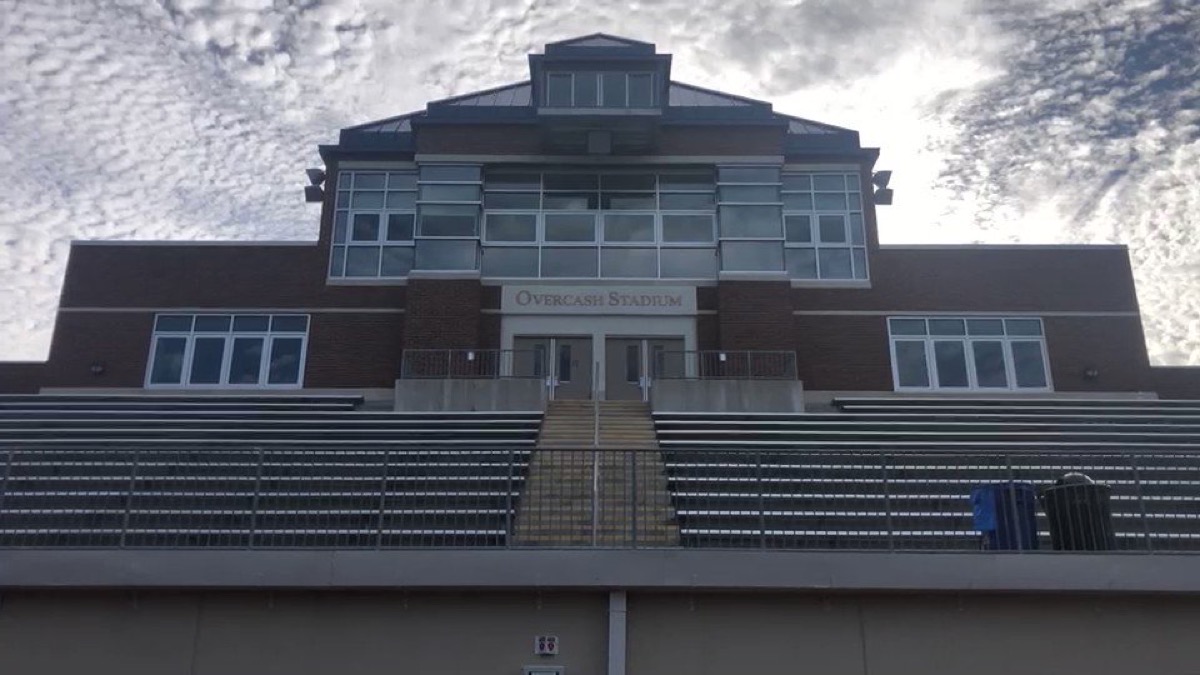
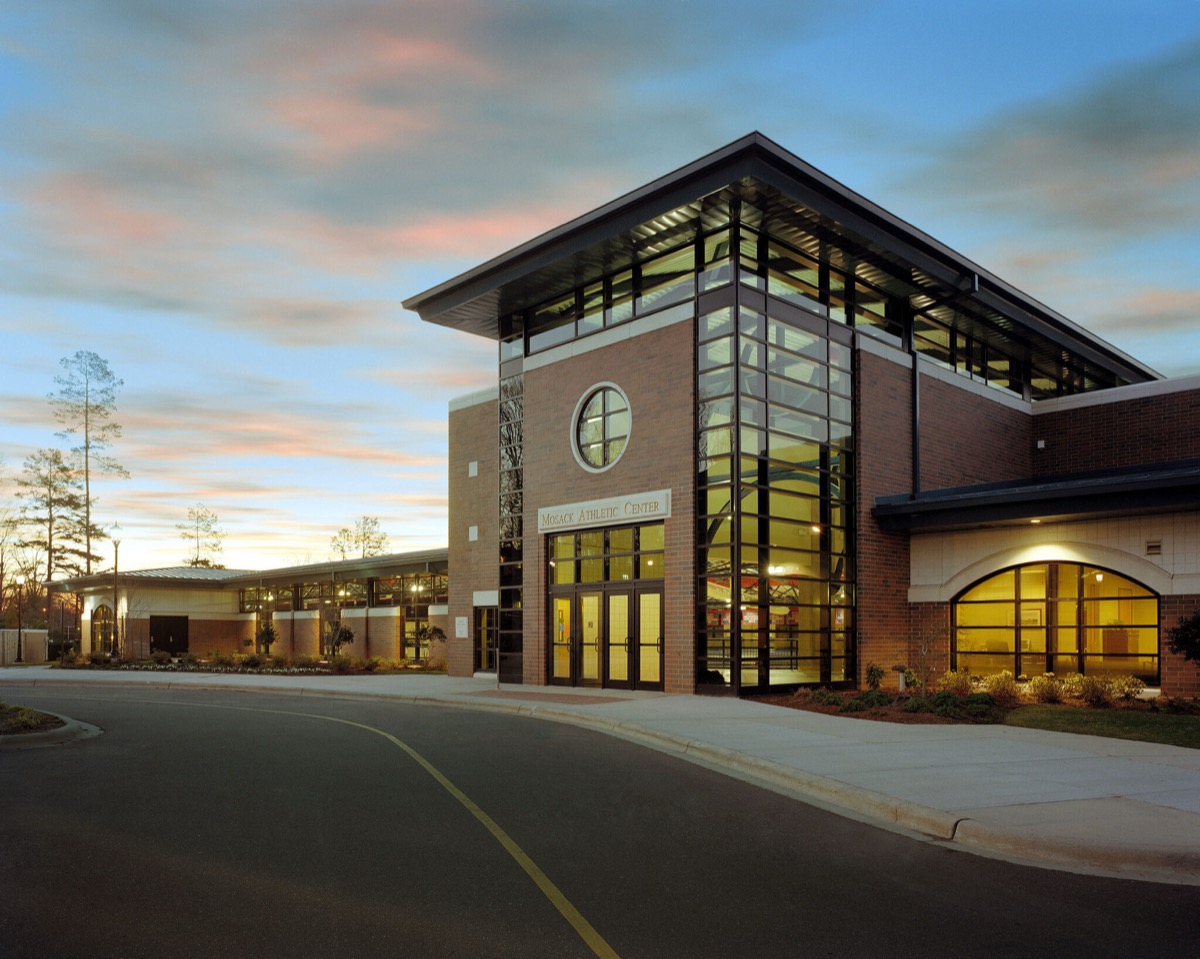
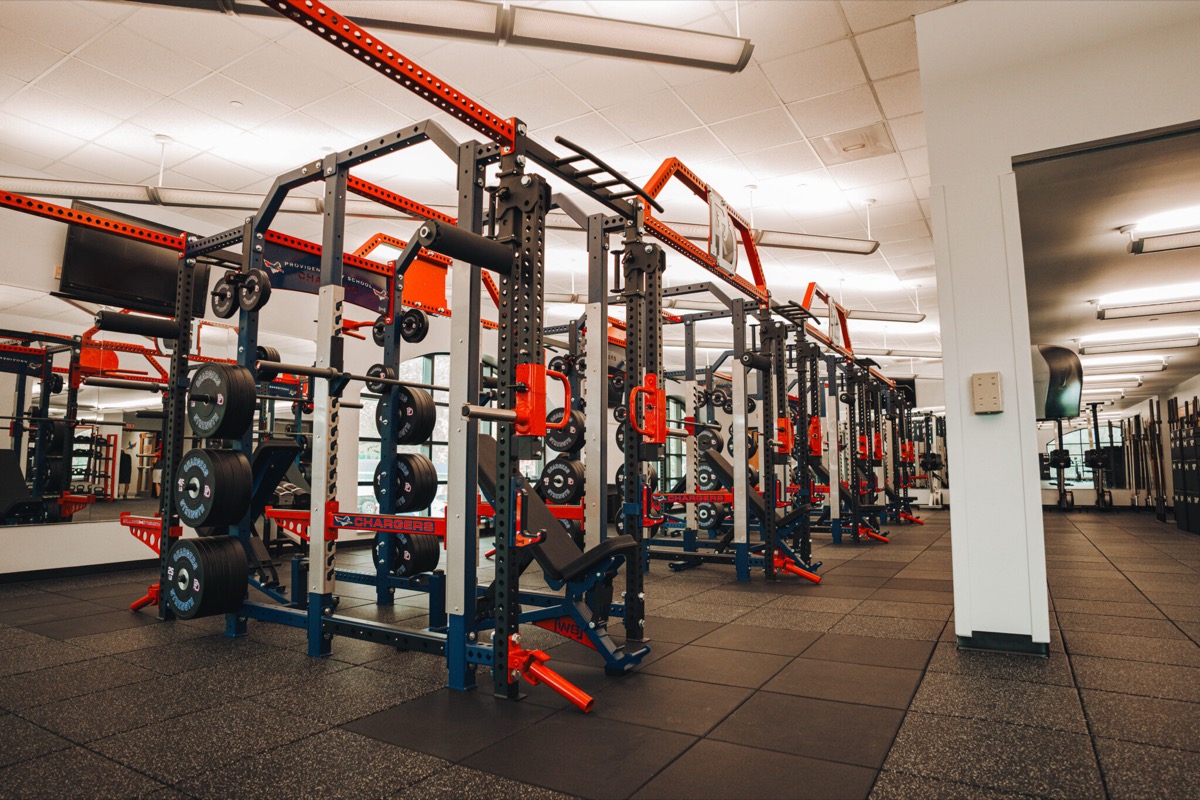
Broadcast & game day: Hudl TV live streams, the PD Sports Network on YouTube, a Bahakel Sports partnership (PD–Charlotte Christian has been its Game of the Week), GoFan ticketing, and a dedicated Sports Information Director.
Context: CMS public schools partner with Atrium Health and Charlotte Country Day uses OrthoCarolina. PD’s fully in-house model is the differentiator to probe on a tour. Seating capacities are not published for any PD venue.
National Stage & NIL
MaxPreps ranked PD #1 in North Carolina across all classifications — and for a full year its athletes could sign NIL deals while public-school rivals legally could not. Grier’s stated goal: "the epicenter of high school football… and beyond."
Scheduling up is the tell of a program chasing national recognition — it also means a harder week-to-week slate for your athlete. Note the tension: PD went 13–0 and won state in 2025 yet MaxPreps still ranked it #3 in NC, because the algorithm weights strength of schedule against large public programs.
College Support
Compare on College SupportAdmission Rates at the Top NC Public Universities
Across the six top-ranked NC public universities, Providence Day School’s applicants were admitted at a pooled 51.1% over the last five entering classes — 499 acceptances from 977 applications. NC State University is the hard one: 32.4% in Fall 2025 — 23 of 71 — against far higher rates at the less-selective universities. These are UNC-system figures published by the state, not the school’s own.
| Rank | University | Applied | Accepted | Admit rate from this school | 5-yr avg |
|---|---|---|---|---|---|
| #1 | UNC-Chapel Hill Flagship · Chapel Hill | 103 | 47 | 45.6% | 42.0%419 applied · 176 in |
| #2 | NC State University Flagship STEM · Raleigh · the most selective of the six | 71 | 23 | 32.4% | 38.5%304 applied · 117 in |
| #3 | UNC Charlotte Hometown campus | 20 | 17 | 85.0% | 89.6%67 applied · 60 in |
| #4 | East Carolina University Greenville · eastern NC | 13 | 12 | 92.3% | 91.0%67 applied · 61 in |
| #5 | UNC Wilmington Coastal · mid-selectivity | 19 | 10 | 52.6% | 57.8%83 applied · 48 in |
| #6 | UNC Greensboro Piedmont Triad · largest admit rates of the six | 7 | 7 | 100.0% | 100.0%37 applied · 37 in |
Read each row as a joint figure: the rate at which that university admitted this school’s applicants — not the university’s overall admit rate, and not a measure of the school’s own selectivity. Applied/Accepted are the Fall 2025 entering class; the 5-yr column pools Fall 2021–2025 as sum(accepted)/sum(applied), so a heavy year counts more than a light one. Counts travel with every rate because several cells are single-digit.
The Transcript Colleges See
Every AP student must sit the exam, so the score distribution colleges read is complete — and 94% of 2025’s scores were a 3 or higher, with 77% at 4 or 5. The Academic Profile hands admissions readers verifiable numbers rather than adjectives: a per-subject AP table covering all 31 subjects, a GPA-quintile table, and stated course-load norms.
| Class | National Merit & College Board honors |
|---|---|
| 2026 | 9 Semifinalists — all 9 advanced to Finalist · 18 Commended · 26 AP Scholars, 29 with Honor, 51 with Distinction |
| 2025 | 7 Semifinalists · 16 Commended · 13 College Board National Recognition awards |
| 2024 | 7 Finalists · 16 Commended · 8 College Board Achievement Scholars |
| 2022 | 9 Semifinalists |
| 2021 | 6 Semifinalists · 16 Commended · 4 National Recognition — 25 recognised in all, 17% of the class |
| 10-yr | Over 85 Finalists and 152 Commended Scholars in the past decade (school-reported aggregate)TO VERIFY |
The 9/18 and 7/16 pairs are different class years rather than a conflict — 2026 is a genuine step up from the recent ~7/~16 baseline. Note the currently-posted 2025–26 Academic Profile is stale on this metric: it still reports the Class of 2024 ledger although the Class of 2026 has graduated.
The Counseling Engine
Five credentialed counselors each take one fifth of every Upper School class — about 36 seniors apiece — under a director who has run the office for 18+ years. A four-year cadence from 9th-grade First Year Focus to a senior-fall Application Bootcamp, all six application workstreams named in the published remit, and ~150 college reps hosted a year.
That is the school’s own published list, verbatim — six named workstreams. Family programming adds “Paying for College”, “Advice on College Scholarships and Aid”, a Gap Year Fair, and athletic-recruiting and arts-in-college sessions run in alternating years.
Where Graduates Go
All eight Ivies appear on the 2023–2026 acceptance list — and all eight are bolded as enrolling more than one graduate. The Class of 2025 was accepted at a school-record 249 colleges across 39 states, DC and 6 countries; 100% of graduates attend four-year colleges. Here the ~382-institution list is scored against current U.S. News tiers.
| Tier | On list |
|---|---|
| Ivy League — no absences, all bolded | 8 / 8 |
| “Ivy Plus” — adds Stanford, MIT, Chicago, Duke, Caltech and peers | 17 / 17 |
| Top-75 National Universities | 58 / 75 |
| Top-75 Liberal Arts — absent Harvey Mudd and Grinnell at the very top | 43 / 75 |
| Power Four — the full ACC, plus 15 of 16 SEC, 17 of 18 Big Ten and 15 of 16 Big 12 | 65 / 68 |
| HBCUs — Historically Black Colleges & Universities | 14 / 107 |
Counts are computed from the same 382-institution list you can filter at right, scored against the 2026 U.S. News tables — derived analysis, not school-reported figures. Coverage of the Top-75 nationals is close to saturated: it is harder to name one missing than present.
380 college names link to their homepages.
Discrepancy: the admissions page cites $23M in merit scholarships for the Class of 2025 while the official Academic Profile states “over $20M” in scholarships for the same class. The wording differs too — the larger figure describes the narrower category, which suggests different compilation dates or methods rather than a clean nesting. Both are the school’s own numbers.
Honest caveat: this is an acceptance list, not a matriculation list — a four-year rolling aggregate in which a student admitted to twelve schools appears twelve times. Per-university enrollment counts are not published. Two further inconsistencies matter: the live page covers 2023–2026 while the profile PDF covers 2022–2025, and the two documents define bold differently (“more than one” member versus “one or more”), so bolding cannot be read consistently across them.
The Applicant's Edge
Two levers work at once: the student builds a verifiable spike through nation-first diploma programmes and a required internship, and the Academic Profile makes the school’s disclosure do the vouching. One is what your child brings; the other is the standing the building lends to the file.
The Entrepreneurial Studies Diploma is announced but its course requirements, capstone and internship structure are not published — inquiries are directed to an email address. Compare Global Studies, which publishes both requirements and a 344-graduate throughput.
Whole Class Analytics
No class rank — a published quintile table gives colleges rank-like context without pitting classmates against each other, so several students can present as top candidates. It is also the most analytically honest table the school prints: a 392-point SAT gap between the top and bottom fifths shows a large, academically heterogeneous class rather than a uniformly elite one.
| Percentile | 10th | 25th | 50th | 75th | 90th | Mean |
|---|---|---|---|---|---|---|
| SAT total | — | 1220 | — | 1460 | — | 1334 |
| Reading & Writing | — | 630 | — | 740 | — | 674 |
| SAT Math | — | 590 | — | 730 | — | 659 |
The profile publishes the mean and the middle 50% only. The middle-50% endpoints ARE the 25th and 75th percentiles, so those columns are real school figures; the 10th, 50th and 90th are shown as “—” rather than modelled, because the school does not publish them.
| Percentile | 10th | 25th | 50th | 75th | 90th | Mean |
|---|---|---|---|---|---|---|
| ACT composite | — | 23 | — | 31 | — | 27 |
| ACT English | — | 23 | — | 34 | — | 28 |
| ACT Math | — | 24 | — | 34 | — | 29 |
143 SAT plus 159 ACT testers against 176 graduates implies heavy overlap and near-universal testing — roughly 81% SAT and 90% ACT participation. The school publishes no formal test-optional position and no submission rate.
All five quintiles are the school’s own published figures — nothing here is interpolated. Read the spread: 4.467 → 2.930 is a 1.54 weighted-GPA gap and 1445 → 1053 a 392-point SAT gap. Because AP adds a full point, a 3.891 weighted median is a mid-B-plus unweighted transcript with some honours load. Note the quintiles describe the Class of 2026 while the test scores above describe the Class of 2025 — different cohorts, so do not blend them.
How accommodations are documented for College Board / ACT testing, and how many students hold them, is not published — and the Student Services page returned a 404 during this research pass, so the named staff should be re-confirmed.
Verdict & Visit Checklist
A mature, stable, high-touch college programme that delivers elite outcomes at the top and real placement through the middle — and hands colleges a transcript built to be trusted. The open questions are about the current year and the unpublished operational details — exactly what a campus visit answers.
After School
Compare on After SchoolThe Coverage Map
Two programs cover TK through grade 8 until 6:00 p.m. — a nationally recognized Extended Day for Lower School and the drop-in Clubhouse for Middle School. Upper School has no published option after dismissal, and there is no before-school care at any division on regular days. Summer Programs carry the coverage year-round under separate registration.
dismissal 1:00
dismissal 2:00
dismissal 2:50
dismissal 3:10
dismissal 3:10
Prices on the bars are the full-time monthly rate — 5 days a week, the most common case. Extended Day is also sold at 1–4 days a week for less; open The Cost Planner below to price any combination.
PUBLICATION GAPThe Activity Day fee is never stated. The school says a separate fee applies on teacher workdays and holidays but publishes no amount — an unbudgetable line item on exactly the days families most need coverage.
TO VERIFYGrades 1–5 dismiss at 2:50 but the fee matrix bills them from 3:00. The ten-minute gap is not explained on any published page.
The Cost Planner
Extended Day is priced as a monthly contract by grade, pickup time, and days per week — billed via Blackbaud, with no drop-in option at all. All 40 cells below are published by the school in its official 2026-27 fee document, so nothing here is projected. Pick a row and a days-per-week column to see what your schedule actually costs.
| Grade · pickup slot (monthly) | 1 day VERIFIED | 2 days VERIFIED | 3 days VERIFIED | 4 days VERIFIED | 5 days VERIFIED |
|---|---|---|---|---|---|
| $140 | $225 | $315 | $400 | $490 | |
| $165 | $275 | $385 | $500 | $610 | |
| $190 | $330 | $470 | $610 | $750 | |
| $100 | $145 | $195 | $240 | $290 | |
| $130 | $210 | $290 | $370 | $450 | |
| $165 | $275 | $385 | $500 | $610 | |
| $100 | $150 | $195 | $245 | $290 | |
| $135 | $220 | $300 | $385 | $470 |
Schedule changes by email, by the 1st of the month. Billed monthly via Blackbaud Tuition Management. The $30/hr adjustment rate is explicitly not drop-in pricing — the school offers no drop-in for Extended Day.
PUBLICATION GAPThe number of billing months is never stated. The fee document publishes monthly rates but not how many months are billed, so an annual total cannot be computed exactly — the school-year figures here assume 9 months and should be confirmed.
PUBLICATION GAPNo sibling discount is published for either tuition or Extended Day. Two children in grades 1–5 at the full 3:00–6:00 tier is $940/month.
TO VERIFYSources disagree on the billing platform: the fee document names Blackbaud, the tuition and aid pages reference Clarity, and an archived FAQ references Smart Tuition.
TO VERIFYFinancial assistance reaches after-school here, which is uncommon — the tuition page states aid "may be available for some of these additional costs", naming Extended Day and Clubhouse. It is hedged, not a guarantee.
A Day Inside + Enrichment
Extended Day is a child-development program, not a waiting room — nurturing relationships, flexible scheduling and child-led choice are the school’s own framing. The enrichment afternoon is published step by step, and it changes by division: TK and K are collected from their classrooms, grades 1–2 are walked to the Dining Hall, and grades 3–5 make their own way there.
A drop-in destination for every Middle Schooler, every school day, with no sign-up. Students may self-register and sign themselves in and out for practices, games, music lessons and rehearsals — a meaningfully more autonomous model than Lower School. In Lower School, study hall runs for grades 3–5 only, Monday–Thursday, 3:15–4:00 p.m., and is explicitly independent study with no one-on-one academic help.
The school’s own Fall 2026 packet — real fees, days and grade bands. All classes run 10 sessions; TK/K classes are $200 and grades 1–5 are $220. Students may take only one enrichment program per day, and enrolment in Extended Day is required to attend any of them.
| Class | Day | Grades | Fee |
|---|---|---|---|
| Art Classical and modern styles on canvas with Coloring on Canvas, LLC | Mon | TK–K | $200 |
| Art Explorers / Art Discoveries Drawing, painting, printing and sculpting; grades 3–5 focus on finding an artistic voice | Mon | 1st–5th | $220 |
| Wrestling Coached by Terry Tadeo, Tommy Racano and Paul Burnam — hard work, teamwork and resilience | Mon | TK–5th | TK/K $200 · 1–5 $220 |
| Chess Professional instructors from the Charlotte Chess Center and Scholastic Academy | Tue | K–5th | K $200 · 1–5 $220 |
| YoLa — Yoga & Language Charlotte Speech & Hearing Center: literacy activities combined with pediatric yoga | Tue | TK–2nd | $200 |
| Running Club Led by PDS Varsity Girls Track and Field Head Coach Kris Jones — hydration, rest and stretching | Tue | 4th–5th | $220 |
| Science — Mad Science Jr. Exploration Air, sea and surf, colour, energy, states of matter, weather and lasers | Wed | TK–K | $200 |
| Science — Crazy Chemworks Mad Science Charlotte: super-sticky stuff, glow-in-the-dark tech, potions, slime and atoms | Wed | 1st–5th | $220 |
| Theatre Explorers Storytelling through body, voice and imagination — no final performance, low pressure | Wed | TK–K | $200 |
| Theatre — StageCraft Studio Improvisation, character development, scene-building, voice and ensemble collaboration | Wed | 1st–5th | $220 |
| Karate Eliza Newell, third-degree black belt — self-defence blended with respect and discipline | Thu | TK–5th | $220 |
| LEGO Masters: Once Upon a Brick Fairytales and legends as building challenges — balance, engineering and creative design | Thu | 1st–3rd | $220 |
| Coding PDS Middle School CS teacher Todd Johnson — app-building and makerspace skills on school iPads | Thu | 4th–5th | $220 |
| Charger Cheer Led by Ari Patterson; the squad cheers a quarter at a fall PDS Varsity football game | Fri | TK–5th | TK/K $200 · 1–5 $220 |
| Amazing Athletes The basics of 10 sports with motor-skill development, nutrition and muscle identification | Fri | TK–5th | TK/K $200 · 1–5 $220 |
TO VERIFYEnrichment is gated behind Extended Day enrolment — a class always sits on top of a monthly Extended Day charge, and Fall 2026 registration closed on 26 July with classes filled first-come, first-served.
PUBLICATION GAPNo staff-to-child ratio is published for either Extended Day or Clubhouse, and Clubhouse publishes no daily structure or homework-support commitment at all.
Verdict & Visit Checklist
A strong TK–8 story: a nationally recognized Lower School program with the most transparent pricing in this set, plus a dedicated Middle School drop-in model many peers don’t offer. The open questions are ratios, the Upper School gap, and the unpublished Activity Day fee — exactly what a visit answers.
Summer Programs
Compare on Summer ProgramsThe Camp Catalog
The largest published slate of the six schools — 170 priced camps across nine sessions, from a $255 four-day half-day to a $1,275 three-week musical production. Nine sessions run June 1 to July 31, 2026. Two of them are four-day weeks (no camps June 19 or July 3) and are priced down accordingly.
60 of the 170 published camp rows are listed below, sampled across every category and every price tier. The full catalog is in the school’s 2026 brochure, linked in the sources. Grades shown are rising grades; (G) and (B) mark the camps the school lists as girls-only or boys-only.
| Camp | When | Grades | Price |
|---|---|---|---|
| Charger Chill Day Camp (9am-4pm)Traditional Day Camp The full-day traditional camp, offered in five of the nine sessions. | Mon–Fri 9am–4pm S1, S2, S6, S8, S9 | TK-5 | $540 |
| Charger Chill Day Camp (8am-5pm)Traditional Day Camp The same camp on extended hours — the longest published camp day at any of these schools. | Mon–Fri 8am–5pm S1, S2, S6, S8, S9 | TK-5 | $590 |
| Charger Chill Next Level (9am-4pm)Traditional Day Camp The middle-school edition of the traditional day camp. | Mon–Fri 9am–4pm S1, S2, S6, S8, S9 | 6-8 | $540 |
| Camp SpiritTraditional Day Camp Full-day traditional camp in the four-day sessions, priced down for the short week. | 4 days 9am–4pm S3, S5 | TK-5 | $450 |
| Camp SpiritTraditional Day Camp The same camp in a full five-day session. | Mon–Fri 9am–4pm S4, S7 | TK-5 | $550 |
| Athena's Path (G)Premium/Specialty Girls-only specialty camp, run in two grade bands in different sessions. | Mon–Fri 9am–4pm S4 | 5-6 | $595 |
| Athena's Path (G) · rising 7–8Premium/Specialty The older band of the same girls-only specialty camp. | Mon–Fri 9am–4pm S7 | 7-8 | $595 |
| Girls Slumber Party Camp (G)Premium/Specialty New for 2026. Girls-only premium specialty camp. | Mon–Fri 9am–4pm S4 | 2-7 | $595 |
| CK's Madagascar Jr. Production CampMusic; The Arts; Theater New for 2026. A three-week run culminating in two public performances; auditions required in May. | 3-week run 9am–4pm S2–S4, June 8–26 | 2–11 | $1,275 |
| CK's Shrek Jr. Production CampMusic; The Arts; Theater The second three-week production of the season, also audition-based. | 3-week run 9am–4pm S5–S7, June 29–July 17 | 2–11 | $1,275 |
| CK's For Good: Wicked Part 2 Mini-MusicalThe Arts; Theater A one-week musical, staged inside a single session. | Mon–Fri 9am–4pm S2, S6 | 2-7 | $540 |
| CK's Hamilton Mini-MusicalThe Arts; Theater One-week musical production camp. | Mon–Fri 9am–4pm S8 | 2-7 | $540 |
| CK's Moana Mini-MusicalThe Arts; Theater One-week musical production camp. | Mon–Fri 9am–4pm S7 | 2-7 | $540 |
| CK's Annie the Mini-MusicalThe Arts; Theater One-week musical production camp. | Mon–Fri 9am–4pm S1 | 2-7 | $540 |
| CK's Beauty and the Beast Mini-MusicalGames & Hobbies; Music; The Arts; Theater The four-day-week edition of the mini-musical format. | 4 days 9am–4pm S3 | 2-7 | $445 |
| Magical Musical Princess CampThe Arts; Music Full-day music and theater camp for the youngest campers. | Mon–Fri 9am–4pm S1 | TK-2 | $540 |
| Rising Stars Singing CampMusic New for 2026. Half-day vocal camp. | Mon–Fri 9am–12pm S6 | 3–8 | $315 |
| Songwriting CampMusic Half-day songwriting workshop spanning the full grade range. | Mon–Fri 1–4pm S2 | 3-12 | $315 |
| Strummin' GuitarsMusic Half-day guitar camp. | Mon–Fri 9am–12pm S2 | 2-8 | $315 |
| Tiny Uke TunesMusic Ukulele camp for the youngest players. | Mon–Fri 1–4pm S2 | K-3 | $315 |
| Singing Auditions BootcampMusic; The Arts New for 2026. Audition preparation for older singers. | Mon–Fri 1–4pm S7 | 8-12 | $315 |
| IDEAS - ArchitectureSTEM The IDEAS lab’s architecture camp, open to the widest grade span in the program. | Mon–Fri 9am–12pm S2, S7 | 6-12 | $450 |
| IDEAS - CAD and 3D PrintingSTEM Computer-aided design and 3D printing in the school’s IDEAS lab. | Mon–Fri 9am–12pm S6 | 6-12 | $450 |
| IDEAS - Drone CampSTEM Drone flight and engineering. | Mon–Fri 1–4pm S4, S7 | 5–8 | $450 |
| IDEAS - Game Coding with AISTEM Game development using AI tooling. | Mon–Fri 1–4pm S6 | 6-8 | $450 |
| IDEAS - Roblox StudioSTEM Building and publishing in Roblox Studio. | Mon–Fri 9am–12pm S4 | 6-12 | $450 |
| IDEAS - Battle Bot CampSTEM New for 2026. Combat robotics — priced $360 in the four-day session and $450 in the five-day one. | Mon–Fri 1–4pm S5 | 5-8 | $360 |
| IDEAS - The Life of an InfluencerAcademic Enrichment; STEM New for 2026. A full-day camp on social media, spanning grades 3 to 12. | 4 days 9am–4pm S3 | 3-12 | $540 |
| IDEAS - Wizarding Minecraft Build CampSTEM New for 2026. Themed Minecraft building. | Mon–Fri 1–4pm S4 | 3-5 | $450 |
| IDEAS - Rockets and DesignSTEM Rocketry and design, offered to two grade bands in the same session. | Mon–Fri 9am–12pm S4 | 2–3 | $450 |
| IDEAS - LEGO Masters: Space Builders ClubSTEM New for 2026. LEGO engineering on a space theme. | 4 days 9am–12pm S3 | 1-3 | $360 |
| CAMMP: Mathematics, Robotics, & CodingSTEM The school’s long-running full-day math, robotics and coding camp. | Mon–Fri 9am–4pm S6 | 1-6 | $540 |
| CAMMP: Upper Grades Robotics & CodingSTEM New for 2026. The middle-school half-day edition of CAMMP. | Mon–Fri 9am–12pm S2 | 5-8 | $315 |
| Lego Camp: Something to Build OnSTEM Full-day LEGO engineering camp. | Mon–Fri 9am–4pm S6 | 3-5 | $540 |
| Ocean Critter AdventureSTEM Full-day marine science camp. | Mon–Fri 9am–4pm S4 | 5-8 | $550 |
| Website Design and Development for kids!STEM Half-day web development. | Mon–Fri 1–4pm S4 | 5-9 | $315 |
| Lab Rats: Science Skills for Middle SchoolersSTEM New for 2026. Lab technique for middle schoolers. | Mon–Fri 1–4pm S9 | 6-8 | $315 |
| Stones, Bones, and DirtSTEM Earth science, offered as both a morning and an afternoon camp in the same session. | Mon–Fri 9am–12pm & 1–4pm S4 | 4-8 | $315 |
| Hoop State Basketball Camp (B)Sports Full-day boys basketball camp. | Mon–Fri 9am–4pm S7 | 3-8 | $540 |
| PD Girls Basketball Camp of Champions (G)Sports Girls basketball, on extended 8am start hours. | Mon–Fri 8am–12pm S1 | 4-9 | $345 |
| Playlax Full Throttle (B)Sports New for 2026. Full-day boys lacrosse. | Mon–Fri 9am–4pm S9 | 1-8 | $540 |
| Playlax LiteSports The four-day-week lacrosse camp. | Mon–Fri 9am–4pm S5 | 1-8 | $445 |
| All Star Baseball Academy (B)Sports Half-day boys baseball. | Mon–Fri 9am–12pm S2, S4 | 1-8 | $315 |
| Charger Wrestling SmackdownSports Half-day wrestling camp. | Mon–Fri 9am–12pm S1 | 1-8 | $315 |
| Soccer for FUNdamentalsSports The widest grade span of any sports camp here — TK through 9. | Mon–Fri 9am–12pm S1, S4, S6 | TK-9 | $315 |
| Charged Up TennisSports Half-day tennis. | Mon–Fri 9am–12pm S1, S2 | K-6 | $315 |
| Field Hockey CampSports Half-day field hockey. | Mon–Fri 9am–12pm S7 | 4-8 | $315 |
| G7 Youth Football CampSports Half-day football. | Mon–Fri 1–4pm S2, S8 | 3–8 | $315 |
| Jump In Charger Cheer CampSports Cheerleading, offered in three consecutive sessions. | Mon–Fri 9am–12pm S7, S8, S9 | K-5 | $315 |
| Volleyball 101 (G)Sports Four-day-week girls volleyball. | 4 days 1–4pm S3 | 6-9 | $255 |
| MATI KarateSports Karate, offered as both a morning and an afternoon camp in the same session. | Mon–Fri 9am–12pm & 1–4pm S9 | TK-5 | $315 |
| CK's Creative Writing InstituteAcademic Enrichment A full-day writing camp under the CreativeKids partnership. | Mon–Fri 9am–4pm S8 | 2-7 | $540 |
| CK's Jewelry MakingThe Arts Half-day jewelry studio. | Mon–Fri 9am–12pm S4 | 2–6 | $315 |
| CK's Sculpting StudioThe Arts Half-day sculpture. | Mon–Fri 1–4pm S4, S7 | 2–6 | $315 |
| Jewelry WorkshopThe Arts A separate jewelry camp priced at $340 in a five-day week and $270 in a four-day one. | Mon–Fri 1–4pm S2 | 3-8 | $340 |
| Sewing Wonderland (1st to 3rd grade)The Arts Sewing for the younger band; a separate 4–7 edition runs alongside it. | Mon–Fri 1–4pm S1, S2, S9 | 1-3 | $340 |
| Movie Magic: A Week of Filmmaking FunThe Arts Half-day filmmaking, open through grade 12. | Mon–Fri 9am–12pm S1 | 6-12 | $315 |
| Photography Adventures: From Darkroom to DigitalThe Arts Half-day photography spanning film and digital. | Mon–Fri 1–4pm S1 | 6-12 | $315 |
| Writing the College-Application EssayAcademic Enrichment Rising seniors only; offered in three consecutive sessions. | Mon–Fri 9am–12pm S7, S8, S9 | 12 | $315 |
| AI Literacy 101Academic Enrichment New for 2026. AI literacy for grades 7 through 12. | Mon–Fri 9am–12pm S1 | 7-12 | $315 |
| JumpStart Pre-AlgebraAcademic Enrichment One of three JumpStart math camps, all in the final session. | Mon–Fri 1–4pm S9 | 7-8 | $280 |
| Keyboarding for Kids!Academic Enrichment Half-day typing camp. | Mon–Fri 9am–12pm S8 | 4-8 | $315 |
| Leadership Lab: From Ideas to ImpactLeadership New for 2026. A full-day middle-school leadership camp. | Mon–Fri 9am–4pm S7 | 6-8 | $540 |
| Ignite Leadership: Summer Camps for Girls (G)Leadership New for 2026. Girls-only leadership, grades 6 to 12. | Mon–Fri 9am–12pm S2 | 6-12 | $315 |
| Junior Masters Chess CampGames & Hobbies Offered in seven of the nine sessions — $255 in the four-day weeks, $315 otherwise. | Mon–Fri 1–4pm S4, S6, S7, S8, S9 | K-5 | $315 |
| Calling All Minecraft LoversGames & Hobbies; STEM Half-day Minecraft, grades 2 through 9. | Mon–Fri 1–4pm S1, S6, S8 | 2-9 | $315 |
| Ice Cream CampGames & Hobbies One of the school’s four culinary-leaning hobby camps at the $375 tier. | Mon–Fri 1–4pm S7 | 2-7 | $375 |
| SnickerdoodlesGames & Hobbies Baking camp, offered in two sessions. | Mon–Fri 9am–12pm S2, S7 | 2-7 | $375 |
| Babysitting Essentials CampGames & Hobbies; Service New for 2026. A service-and-skills camp for grades 6 to 8. | Mon–Fri 9am–12pm S1 | 6-8 | $315 |
| Unshakable Girls (G)Wellness A girls-only wellness camp, offered in three sessions. | Mon–Fri 1–4pm S2, S4, S8 | K-6 | $325 |
TO VERIFYThe school’s brochure and its website give different weekdays for the two Family Night Creatives evenings (June 12 and June 18). Both are official sources; they disagree with each other, so confirm the day with the summer office before planning around one.
TO VERIFYThe live per-camp pages now return 404 — the 2026 season has ended and the school says the 2027 brochure arrives in December. Camp categories here come from January 2026 archived snapshots of the school’s own pages; 18 of the 170 rows were not in those snapshots and are categorised from the camp name alone.
The Summer Cost Planner
Every tier below is a published Providence Day rate. Pick one, set the number of weeks, and add the care a working family actually needs. Nine sessions are available, so the picker runs to nine. Lunch is already included in tuition for anyone here all day — only half-day campers pay for it.
| Camp tier | Per week |
|---|---|
Sessions 3 and 5 only — the weeks with no camp June 19 or July 3. | $255 |
The most common rate in the catalog — 80 of 170 published rows. | $315 |
The school’s design-and-engineering lab camps. | $450 |
Includes Flik Dining lunch at no extra charge. | $540 |
The traditional day camp on its longest published hours. | $590 |
Athena's Path and Girls Slumber Party Camp. | $595 |
Complete Care is $220/week — the school’s bundled rate for Before and After Care together, $20 less than adding both toggles above separately. Drop-in care is $18/hour, and late pick-up after 6pm is $1/minute.
Lunch by Flik Dining is included in tuition for campers here all day — a full-day camp, or two half-day camps in the same session. Snacks are included in every camp. Only a single-half-day camper pays the $75/week lunch line.
Walk-in registration on the first day of camp carries a $50 administration fee, and refunds — available up to 14 days before a camp starts — carry the same $50. A tuition credit avoids it.
PUBLICATION GAPProvidence Day publishes no sibling discount and no multi-week discount. For a family buying several weeks, that is a real difference from a program that does — and it is worth asking about directly.
Financial Aid & Tuition
Compare on Financial Aid & TuitionIn-Depth Report
Tuition & Financial Aid — Deep Dive Report
Unpublished ≠ deficient. "Not published" flags a transparency gap — never a judgement that the aid programme is small or unwelcoming. The school discloses more than its tuition page suggests — the detailed figures live in the Report on Philanthropy.
Published ≠ current. Every dollar figure carries the school year it applies to. The transportation page still refers to 2023–2024 while the tuition table has moved to 2026–27 — different cycles, not a contradiction.
K–12 aid only. Tuition assistance while enrolled — not the FAFSA, CSS Profile or college merit money the school publishes for its graduates. Not financial advice.
Meters show how fully each section could be answered from published evidence — a disclosure score, not a rating of the school.
The Tuition Table — Price by Band
No prior-year bars: the school's live page shows only the current year and is overwritten each cycle; archived rate cards could not be retrieved — a limit of the toolchain, not a school gap. The page notes tuition is subject to change for 2027–28.
Four bands cover all fourteen grade levels from TK through Grade 12, with no gap and no overlap — TK and Kindergarten priced individually, Grades 1–5 sharing one rate, Grades 6–12 another. Tuition includes student iPads and all technology, all textbooks (including A.P. textbooks), A.P. exam fees, most class field trips, and all Lower School student supplies — an explicit inclusion list that is the least consistently disclosed item in this series.
- A per-grade breakdown within the Grades 1–5 and Grades 6–12 bands
- A separate rate for new versus returning students, if one exists
- Half-day, part-week or other Transitional Kindergarten variants
- A sibling-based variation on the published rate
Beyond Tuition — The Real Cost of Attendance
Of fifteen confirmed components, four carry a published price and eleven do not — 73% unpriced against a one-third threshold, so the all-in estimate aborts rather than assemble a range from mostly-missing parts. The existence of two endowed funds (Section 5) dedicated to costs above and beyond tuition independently confirms these charges are real.
A $2,500 non-refundable deposit, with a signed agreement, secures a place for an accepted student. It is credited toward the total tuition cost — so it is a timing obligation rather than an addition to the published rate, and it is the first instalment, not an extra cost.
The Lower School page links a "2025–26 Extended Day Schedules and Fees" document, and the transportation page states fare information is available — but its live text refers to 2023–2024 and the fare table did not render. Both are documents a family can open or request in a single step; their contents were not retrieved here, not withheld by the school.
The Aid Engine — Process, Forms & Timeline
Providence Day partners with Clarity to assess need · $65 application fee, paid by the family (2026–27). The school describes the application as taking under an hour and mobile-friendly, and runs family webinars at which Clarity walks through the application and the tax-verification process. Need is assessed on gross income, assets, liabilities, family size, and the number of children in tuition-based schools; assistance does not exceed demonstrated need and depends on the availability of school funds.
A 1040 return, W-2s and the most recent pay stub — tax documents transfer automatically from the I.R.S. once verification is complete — plus business returns and 1099s for the self-employed. Documents are required from both custodial and non-custodial parents, whether divorced, separated or never married; the school states that missing information from either parent may affect eligibility.
The school states plainly that applying for assistance does not influence a candidate's admission selection, and that separate committees decide admission and assistance. It does not use the terms "need-blind" or "need-aware," so this report applies neither label.
No appeals or reconsideration process · no mid-year change-of-circumstance policy · no statement of whether awards typically renew at a consistent level (the practical question behind annual reapplication) · no confidentiality policy naming who inside the school sees a family's file · no composition of the assistance committee.
The Aid Numbers — How Much, To Whom, How Far
DETAIL LIVES IN THE PHILANTHROPY REPORTThe tuition page omits every aid figure but one; the numbers live in the annual Report on Philanthropy, "Enrollment at a Glance." Published editions: 2012–13 $3,105,191 awarded, avg $12,273 16% of students · 2013–14 $3,013,928 avg $12,664 · 2017–18 $3,683,971 avg $13,695 16%. No comparable figures were located after 2017–18. A parent reading only the tuition page would never encounter any of this — a placement finding, not a disclosure gap.
Every award figure the school publishes is an average grant — reproduced unchanged and never treated here as a typical award. Aid awards carry a long upper tail, so an average usually sits above what a typical recipient receives; no median is published in any edition located, so a family cannot tell how far above.
The historical editions count students receiving aid (16%); the current page counts families receiving assistance (≈21%). Different units, different bases — the apparent 16% → 21% movement cannot be read as growth in reach. It may be an artefact of the unit change, entirely real, or a mixture. This report declines to reconcile them.
The 2012–13 Report on Philanthropy states $3,105,191 as total aid awarded on its enrollment page and $3,092,165 as the financial-aid line in its expense breakdown a page later — a $13,026 difference, both published by the school in the same document. Both are reproduced; the likeliest explanation is different accounting bases, but the school does not say so and inferring it would be a guess.
Assistance draws on both operating funds and endowment income. 2017–18: financial aid and discounts were 9.7% of expenses against a stated $40.6M budget, and 5% of Annual Fund gifts were designated to Student Financial Assistance. 2012–13: a $3,092,165 aid line within a $33,320,795 expense total — a 9.3% share (our arithmetic on the school's two figures). Schedule I and Schedule D of the Form 990, which would carry the K–12 assistance and endowment detail, could not be retrieved.
Merit, Discounts & Special Programmes
ALL AID IS NEED-BASEDAssistance is need-based; no general academic, arts, athletic or leadership merit scholarship programme is published. At least eleven named permanent funds support aid — e.g. the Paula C. Freeman Financial Aid Endowment ($511,383 in Jun 2018), the Rob Eck Memorial Scholarship, the Edward E. Ford Minority Scholarship, and diversity-focused funds (Brinkley, McGee Family). Fund values are as of 30 June 2018, the most recent edition located, and are historical.
The Gilmer L. Murdock, Jr. Endowment and The Latchwood Endowment exist specifically to help students with demonstrated need meet costs above and beyond tuition — the published descriptions name tutoring, review classes, calculators, class trips, sports equipment, team camps, tournaments, dining and activity fees. These are the same categories that appear unpriced in Section 2; their existence confirms those costs are real.
The Kristina C. Brockmeier Endowment for Financial Aid provides assistance annually to children of current faculty and staff who demonstrate need. This is a need-based endowed award, not a blanket tuition-remission benefit; whether the school separately offers a remission percentage to employees is not published.
No indexed or variable tuition · no sibling, clergy, military or first-responder discount · no general merit programme · no figure for how many awards any named fund makes in a year or what a typical award is worth · no statement of whether a named-fund award stacks with or substitutes for a need-based grant. Absence of a published discount is not evidence none exists — several are commonly handled case by case.
Paying the Balance — Plans & Contract Terms
The $2,500 deposit is non-refundable and secures placement for an accepted student, credited to the overall tuition cost. The published language establishes it is not returned if a family withdraws after signing — but it does not describe what further obligation, if any, a family carries on withdrawal later in the year.
An older school document tied to a previous billing provider referenced a $45 per family annual fee for the extended payment plan. It could not be confirmed against any current-year page and the billing arrangement has since changed — recorded only to show plan fees have existed historically, not a 2026–27 figure.
Whether the 3/10/12-installment plans carry a service fee or interest · whether paying in full earns a discount · which third-party lender, if any, the school partners with · whether a tuition refund or insurance plan is offered, mandatory, and what it costs · the withdrawal and mid-year departure obligation beyond the deposit · the late-payment and arrears policy · whether any prepaid multi-year or tuition-lock option exists. These sit in the enrollment contract, which is not public — a normal arrangement.
Trend, Reach & the Questions to Ask
This section normally carries three to five years of published rates. For Providence Day it does not: the tuition page shows only the current year and is overwritten each cycle, and archived prior-year rate cards were not retrieved. Rather than substitute third-party figures for the school's own rate cards, this report reports no tuition trend — a limit of the toolchain, not a disclosure failure.
Total aid awarded rose from $3,105,191 (2012–13) to $3,683,971 (2017–18), with a $3,013,928 dip in 2013–14 between. The average grant rose $12,273 → $13,695; the share of students at 16% at both ends. Enrollment grew 1,552 → 1,627 students over the window. No comparable figures were located after 2017–18. Endowment market value grew $6,486,512 (Jun 2013) → $14,029,707 (Jun 2018); the school's strategic framework targets $55M by 2030.
Widely-circulated third-party listings carry tuition figures that agree neither with each other nor with the school — an "≈$20,500" single rate, a "$34,430" 2024 top rate, a "$20,800–$29,620" range, a "$23,040–$32,810" 2024–25 range. None matches the school's published 2026–27 bands of $25,510–$36,325. Aggregators cache prior-year figures and are frequently out of date — treat the school's own tuition page as the only authority, even when a search engine surfaces an aggregator above it.
Each corresponds to a gap in this report and is ordered by how much it is likely to move a family's total.
- Q1What does Extended Day cost per day per week, and what are the bus fares for our address, for the current year?
- Q2What do the 8th and 12th grade field trips cost, and when are those charges billed?
- Q3What is the current cost of FLIK Dining participation, and is it charged per meal or per term?
- Q4Do the 3-, 10- or 12-installment plans carry a fee or interest, and is there a discount for paying in full?
- Q5What are the current-year figures for total assistance awarded, the average grant, and the number of students or families assisted?
- Q6Is the ≈21% figure a share of all enrolled families, or of families who applied?
- Q7What is the range of awards, and does any award cover full tuition?
- Q8If we receive an award, what has typically happened to award levels on reapplication in following years?
- Q9Is there an appeals process, and what happens if our circumstances change mid-year?
- Q10What obligation do we carry if a student withdraws after the school year begins?
- Q11Do you offer a sibling, employee, clergy, military or first-responder accommodation?